Salvatore Ferragamo or Ferragamo? Making Sense of the 2022 Rename
Put the question to two people what this house is called and you can get two answers, both of them right. Since around 23 September 2022 the label on the bags, the storefronts and the show invitations has read simply FERRAGAMO. The annual report, the share listing and every major resale platform, however, still state Salvatore Ferragamo. This is not a clash, and it is not a half-finished rebrand that somebody forgot to complete. It is a precise distinction between a brand mark and a legal entity, and once you see it the confusion goes away for good. What follows is that single insight, taken apart and put back together.
September 2022: what actually moved
The change was announced around 23 September 2022, timed ahead of the Spring/Summer 2023 show. What changed was the mark: the founder’s handwritten script signature was replaced by a custom serif drawn by the designer Peter Saville, which references the lettering of classical stone inscriptions. The word Salvatore came off the front of the brand. That is a considerable shift in tone, because a handwritten signature says founder, family and workshop, while a cut serif says institution, monument and permanence. It arrived in the same period as Maximilian Davis’s tenure as creative director, which began ferragamo bags in March 2022, so the visual reset and the design reset landed together. The founder’s name was not erased from the story, only from the front of the label, and the archive he built still underpins every current bag. In practical terms, a bag bought after that point carries a brand identity exactly one word long.
What did not change: the company
Its name is still the company’s, and it was never dropped. The legal entity behind every Ferragamo bag is Salvatore Ferragamo S.p.A., and its own 2026 investor documents carry exactly that name. It is listed on Borsa Italiana under the ticker SFER and stays family-controlled. So this was a rename of the mark, not of the corporation, a distinction that reads as pedantry right up until you try to reconcile a boutique window with a financial filing. Nothing about the ownership, the Florentine headquarters at Palazzo Spini Feroni or the corporate structure was renamed alongside the logotype. Both names are therefore in play together, working in different registers: the first is a brand, the second a company.
Why the secondary market kept the old name
The older name is at its most stubborn in resale. Every major pre-owned platform still files the house under Salvatore Ferragamo, so a listing for a Gancini crossbody or a Hug shoulder bag sits in that category regardless of when the bag was made. There is a straightforward reason for it. Those catalogues reach across decades of stock, and relabelling an archive full of bags made long before 2022 would destroy every historical listing and every saved search. What buyers type is what is stamped inside the bags they already own, which changes slowly. So the secondary market has kept the founder’s first name in circulation even as the boutique let it go. Search only the short form when you shop pre-owned and you will fail to see inventory sitting in plain sight.
Where you will meet each name
The useful way to hold it is that the two names belong to different surfaces, not different eras. On a shop front, a hangtag, a campaign or a runway credit you will see the one-word mark. On a share listing, an annual report or a corporate release you will find the full company name. On a resale platform, in a search box, or in a wardrobe someone has owned for fifteen years, the founder’s name persists. None of these is wrong and none of them contradicts the others. The table below sets out where each version turns up, so you can stop second-guessing which one you are looking at.
| Surface | Which name | Why |
|---|---|---|
| Storefronts, hangtags, campaigns, runway | Ferragamo | The brand mark in use from around 23 September 2022, logotype drawn by Peter Saville |
| Stock listing, annual report, regulatory filings | Salvatore Ferragamo S.p.A. | The legal company name, unchanged; ticker SFER on Borsa Italiana |
| Resale and consignment sites | Salvatore Ferragamo | Catalogues run back decades, so archive listings remain findable |
| Search boxes and ordinary conversation | Either form, misspellings included | Habit survives branding decisions by years |
What happens in the search box
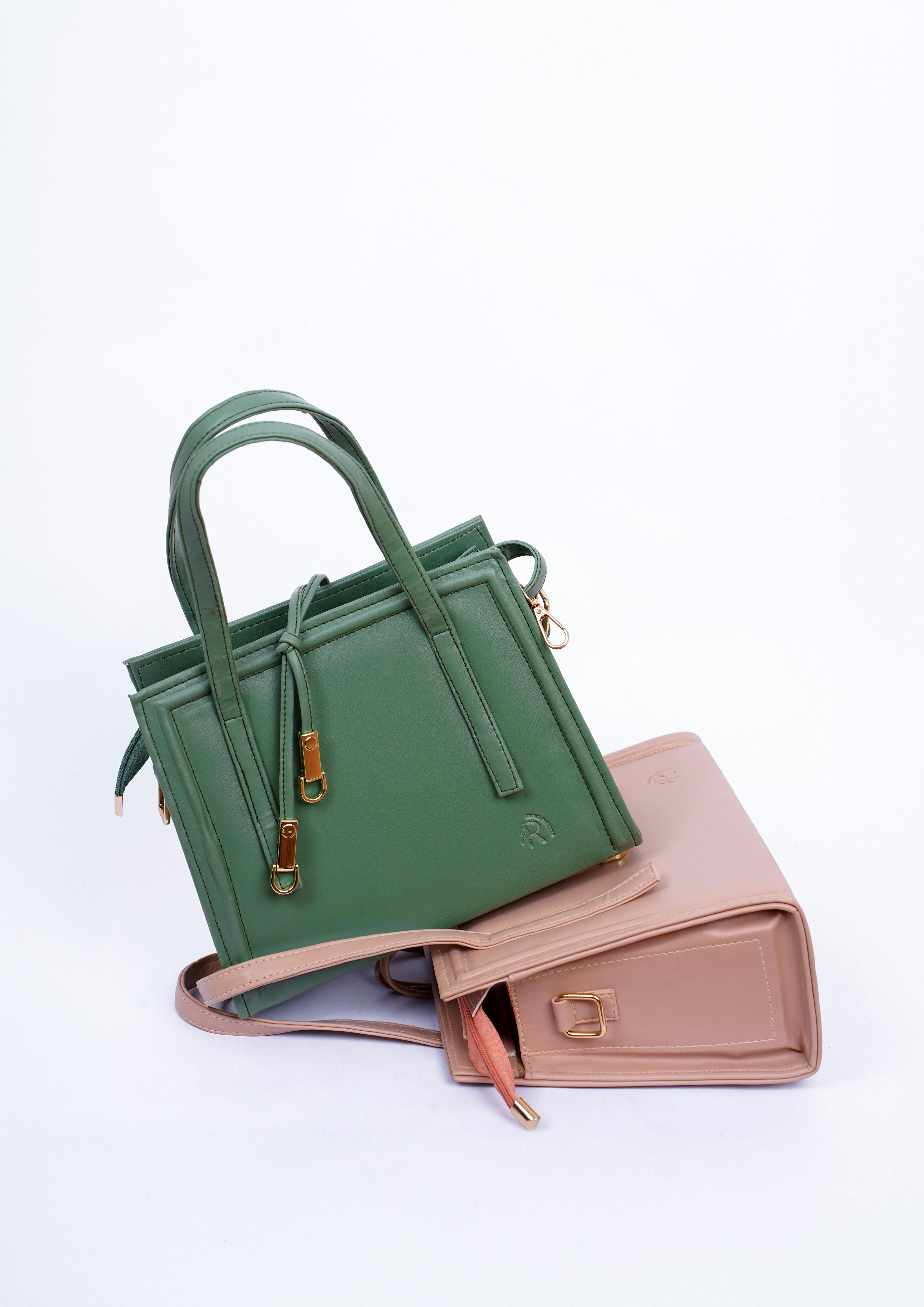
Of all the surfaces, search behaviour is the least tidy, and bluntness helps here. People still type salvatore bag and salvatore bags when they are after handbags from this house, because that is the name they learned first. ferragamo bag and ferragamo bags get typed too, and anyone hunting for a discount will type ferragamo sale or ferragamo outlet. A steady share of them type feragamo, with a single r, which is the most common misspelling of the name. None of these queries is looking for a different brand; they are all looking for the same Florentine leather goods. The practical takeaway is to try more than one spelling before concluding that a model is unavailable.
Did the bags themselves change?
Changing a logo is not changing a product, so it is fair asking what actually moved on the bags. The Gancio and Gancini hardware stayed, and both spellings continue as the brand’s own usage: current copy describes two golden Gancio buckles on the Hug XS and an iconic Gancini closure on the Cara. Made in Italy stayed, with every current bag product page carrying it and the Studio Bag collection page stating that each bag is crafted in Italy. The material vocabulary stayed too, taking in smooth and grained calfskin, suede, python, hand-woven wicker with silk lining, raffia, canvas and jacquard. What did move was emphasis: the Hug became the assortment’s centre of gravity, and the Cara landed as the newest architectural silhouette. Prices did not jump either: observed 2026 market prices on the brand’s own site still run from roughly $830 for an entry Double Gancini piece to about $4,800 at the top of the everyday range, with a thin exotic tail above it. What changed was the way the house signs its work, and nothing else: the design language came through unchanged.
What this means when you shop
Picture the two names as two doors into one room. Anything current calls for the one-word form, since that is how the brand’s own webstore, its roughly 354 boutiques and its authorised stockists, Nordstrom, Bloomingdale’s, Saks Fifth Avenue, Mytheresa and Farfetch included, organise their pages. For anything pre-owned or archival, also try the founder’s full name as well, because that is how the platforms are indexed. Do not take the older name on a listing as a warning sign, and do not treat the newer one as proof of anything either, since both appear in entirely legitimate contexts. One structural fact is truly useful here: there is no official online outlet, only seasonal sale sections on the label’s own site and brand-operated stores inside outlet villages. Any website presenting itself as an official online outlet, under either version of the name, is not this brand. The house takes that so seriously to publish numbers, reporting 107 fraudulent websites and 89,136 counterfeit listings removed for 2022 alone.
The short answer
The distinction in a single line, if that is what you want: the brand is Ferragamo, the company is Salvatore Ferragamo S.p.A., and both are correct in 2026. Taking effect around 23 September 2022, the rename altered the mark, the logotype and the way the house presents itself, while leaving the corporate name untouched. Anyone telling you the brand was renamed outright has half the story; anyone telling you nothing changed has the other half. Resale platforms keep the founder’s name alive, search habits keep it alive, and so does every wardrobe stocked before 2022. Whichever version gets you to the bag you want is the right one to use, and you should expect to meet both. Two names now sit together in this house, with no sign of them being collapsed into one.
Leave a Reply